
Use Henderson County Court Records Online
The main online access point for Henderson County court records is the North Carolina eCourts Portal. The portal supports Smart Search for case information, Search Hearings for dates and calendars, online payments for eligible matters, and a judgment search path. Anonymous users can search public records without creating an account. Registration adds saved-case tools, but it does not open sealed, juvenile, expunged, or otherwise restricted records. Elevated access is a separate process for users with a verified legal or business need.
For best results, search by case number when available. North Carolina's Enterprise Justice case numbers use a year, case type letters, a six-digit sequence, and a county identifier. Name searches can work, but spelling, suffixes, nicknames, and business-name variations may change the result set. If the portal does not show the file, the practical next step is the Henderson County Clerk of Superior Court because older paper files, certified copies, exhibits, and some scanned documents may not appear online.
- Open the NC eCourts Portal and choose Smart Search for Henderson County court records.
- Enter a case number or a party name in the portal's required search field.
- Use advanced filters for Henderson County, case type, status, date of birth, or filing date when the first search is too broad.
- Open the case summary to review parties, events, hearings, dispositions, and financial information when public.
- Contact the Clerk of Superior Court for certified copies, old files, missing documents, or records that require counter review.
The NC Judicial Branch court-records help topic also points users to the clerk for divorce judgments, certified court copies, transcripts, and background-check needs that cannot be solved by a public portal search alone.
Henderson County Court Records Search Fields
Smart Search works best when the search terms match the court file. A single name can return civil, criminal, family, estate, small-claims, and judgment matters, so the Henderson County location filter is important. Portal training also notes that wildcard searches require minimum character counts. That matters when a last name is short, a business name is abbreviated, or the person uses a suffix.
| Field Label | Type | Required | Notes / Format |
|---|---|---|---|
| Record Number or Name | Text | Yes | Use a case number or Last, First Middle Suffix format. Wildcards have minimum character rules. |
| Last Name / First Name | Text | Conditional | Used for party-name precision searches and to narrow broad name results. |
| Filter by Location | Dropdown | Optional | Select Henderson County when the portal includes multiple North Carolina locations. |
| Filter by Search Type | Dropdown | Optional | Options include party name, nickname, business name, and sounds-like matching. |
| Date of Birth From / To | Date | Optional | Can help distinguish people with the same name, subject to access limits. |
| Case Type and Case Status | Dropdown | Optional | Use when looking for criminal, civil, family, estate, judgment, or other categories. |
| File Date Start / End | Date | Optional | Helpful when the filing period is known but the case number is not. |
The official portal training resources describe Smart Search as a near real-time case summary and register of actions, not a guarantee that every document image is public or viewable.
Types of Henderson County Court Records
Henderson County court records are created in both Superior Court and District Court. Superior Court handles felony cases, civil cases over the state threshold, certain special proceedings, and appeals from District Court. District Court handles misdemeanors, infractions, traffic matters, juvenile proceedings, domestic relations, small claims appeals, and magistrate matters. The same Clerk of Superior Court is the local record custodian for both trial-court divisions.
The record type determines what a public search may show. A civil case may show a complaint, summons, answer, motions, orders, and judgment entries. A criminal case may show charges, appearances, bond orders, pleas, hearings, dispositions, sentence, and financial obligations. Estate files can include wills, letters, inventories, accountings, and clerk orders. Family records can include divorce, custody, child support, protective-order, and domestic filings, but some details are redacted or restricted.
- Civil court records can show claims, parties, motions, orders, judgments, liens, and appeal notices.
- Criminal court records can show filed charges, hearings, pleas, dispositions, sentencing, and costs.
- Family and domestic records can show divorce judgments and public case events, with sensitive material limited.
- Estate and special proceeding records are handled through the Clerk of Superior Court and may be searchable by name or case number.
- Traffic and infraction records are court files, separate from North Carolina DMV driving records.
The NC Judicial Branch image source for expunctions is relevant when a Henderson County court record no longer appears in public search.
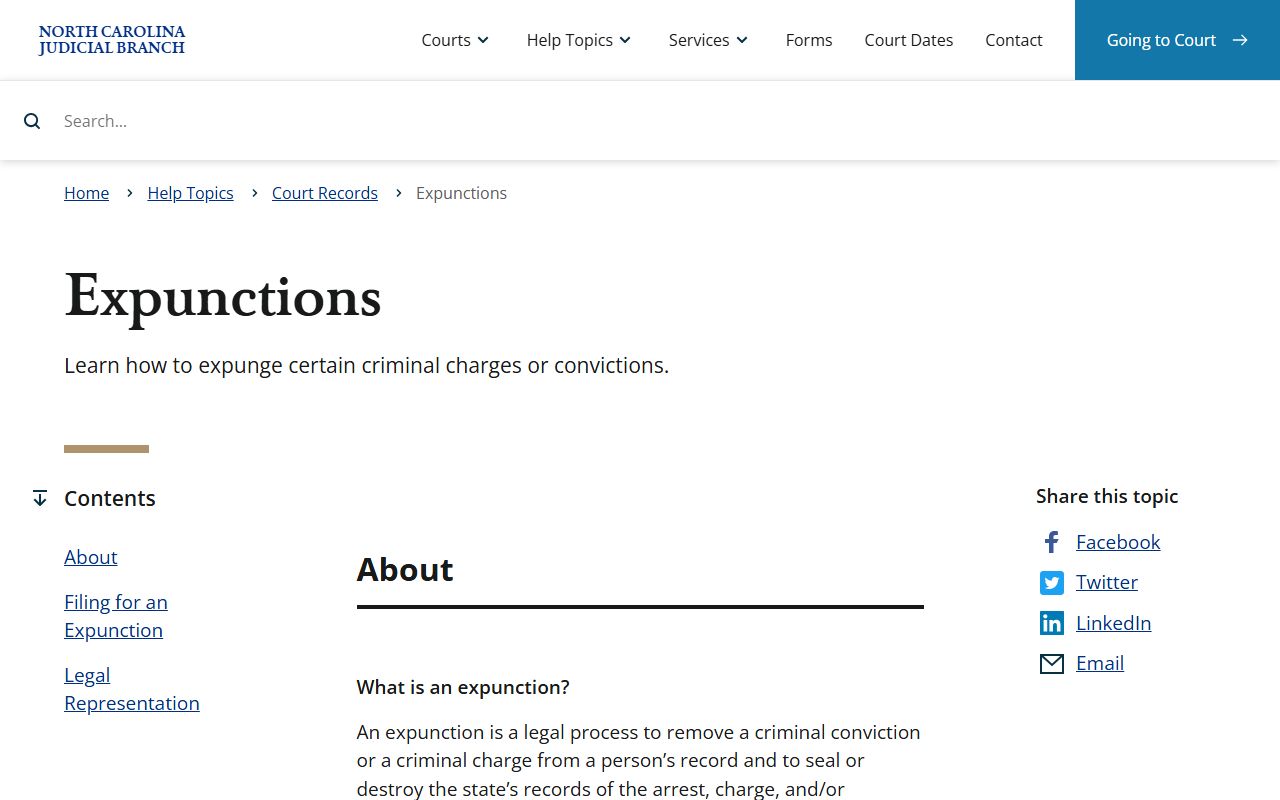
Expunction is a court process, so a missing public record may reflect a valid order rather than a portal error.
What Henderson County Court Records Show
A Henderson County court record is usually read as a timeline. The register of actions lists court events in order, while the case summary gives core details such as the case number, file date, parties, case type, status, hearing settings, dispositions, and financial entries. Some documents may be viewable through the portal, but document access can vary by case type, role, and public-access level.
| Field | What It Shows |
|---|---|
| Case Number | The Enterprise Justice case number, such as year, case type letters, sequence number, and county identifier. |
| Case Summary | A near real-time overview of activity in the case file or register of actions. |
| Case Information | Case type, filing date, court location, status, and disposition where public. |
| Party Information | Names and roles such as plaintiff, defendant, petitioner, respondent, or state and defendant. |
| Case Events | Filings, hearings, continuances, orders, judgments, dispositions, notices, and appeals. |
| Hearings | Date, time, hearing type, courtroom, and judicial officer when public. |
| Financial Information | Court costs, fines, restitution, attorney fees, probation fees, or balances where applicable. |
| Documents | Pleadings, notices, motions, orders, and judgments when scanned and open to the public. |
For criminal-only case outcomes, the Henderson County criminal court records page gives a closer look at charges, pleas, dispositions, and sentencing.
Public Access for Henderson County Court Records
North Carolina court access is not based only on the general public-records law. For trial court files, G.S. 7A-109 is the key court-record statute. It requires clerks to keep records, files, dockets, and indexes under state court rules and makes those records open to inspection during regular office hours unless a law says otherwise. That is why the Henderson County Clerk of Superior Court is the practical source for certified copies and counter review.
Chapter 132 of the North Carolina General Statutes defines public records broadly for agencies, while court records are handled through the clerk and judicial branch rules. If a record is not a court file, use the agency that created it. Sheriff incident reports go through the sheriff. City police reports go through Hendersonville Police. Marriage certificates and vital records go through the Register of Deeds. Driving records go through NCDMV.
Note: Public inspection does not make every field public; sealed files, juvenile records, and personal identifiers may be withheld.
The statutory image source for G.S. 132-1.8 shows why identifying numbers are treated differently from ordinary case events.
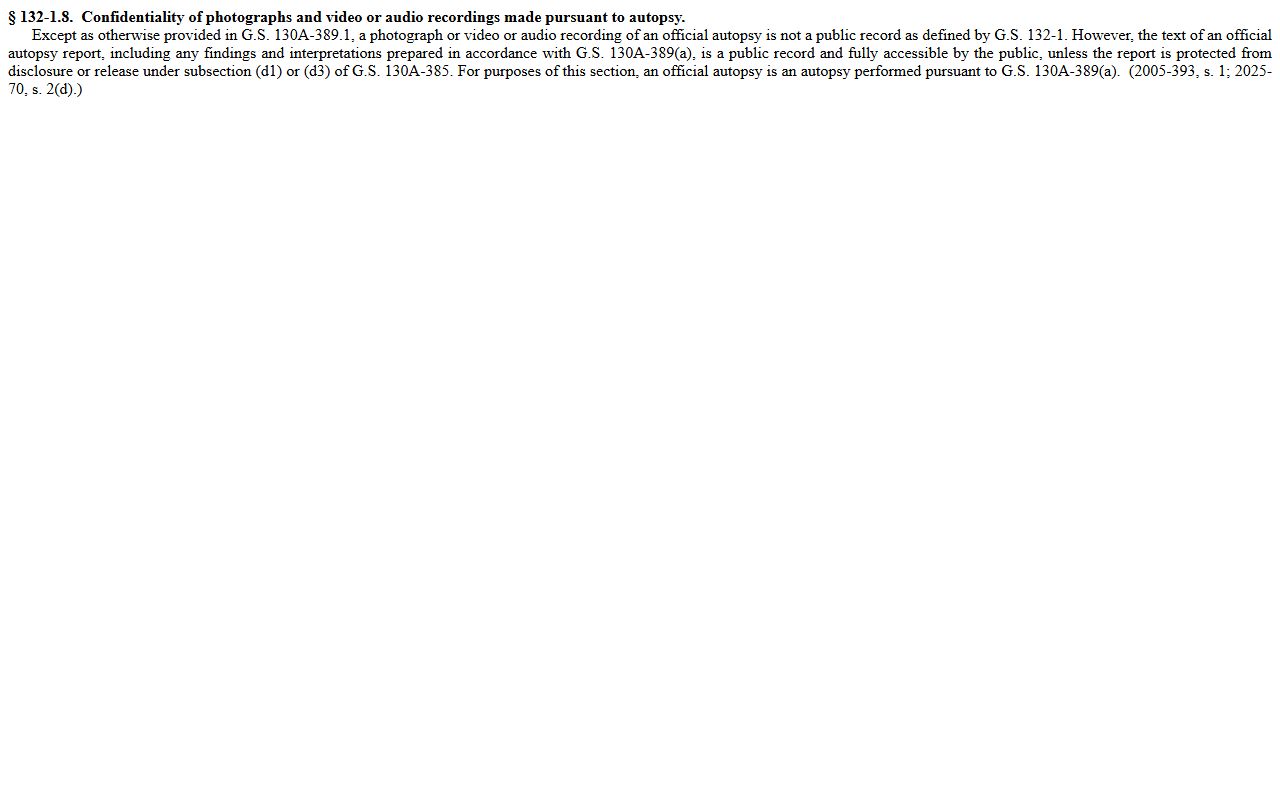
That redaction rule is especially important when court filings contain Social Security numbers, account numbers, or other protected data.
Restricted Henderson County Court Records
Some Henderson County court records are not open in the same way as routine civil or adult criminal records. Juvenile delinquency and abuse, neglect, and dependency files are controlled by juvenile confidentiality rules. Adoption records are confidential. Mental health commitment records are restricted under mental health privacy law. Sealed records remain under court control but are closed to general public inspection. Expunged records are removed from public criminal-record access under the order and statute that apply.
The expunction process is specific. A person files the correct AOC petition in the county where the charge or conviction occurred, usually with the Clerk of Superior Court. Eligibility depends on charge type, disposition, waiting period, criminal history, and statutory exclusions. A granted order directs courts and named agencies to remove the record from public access, but it should not be described as erasing every federal, immigration, licensing, or private database consequence.
| Record Limit | How It Affects Access |
|---|---|
| Juvenile file | Access usually requires party status, statutory authority, or a court order. |
| Sealed record | The file exists but is not open to ordinary public inspection. |
| Expunged record | The public criminal-record access path is removed under the expunction order. |
| Mental health proceeding | Confidentiality law limits public portal visibility and clerk disclosure. |
The official source for G.S. 7B-3000 illustrates the special treatment of juvenile court records in North Carolina.
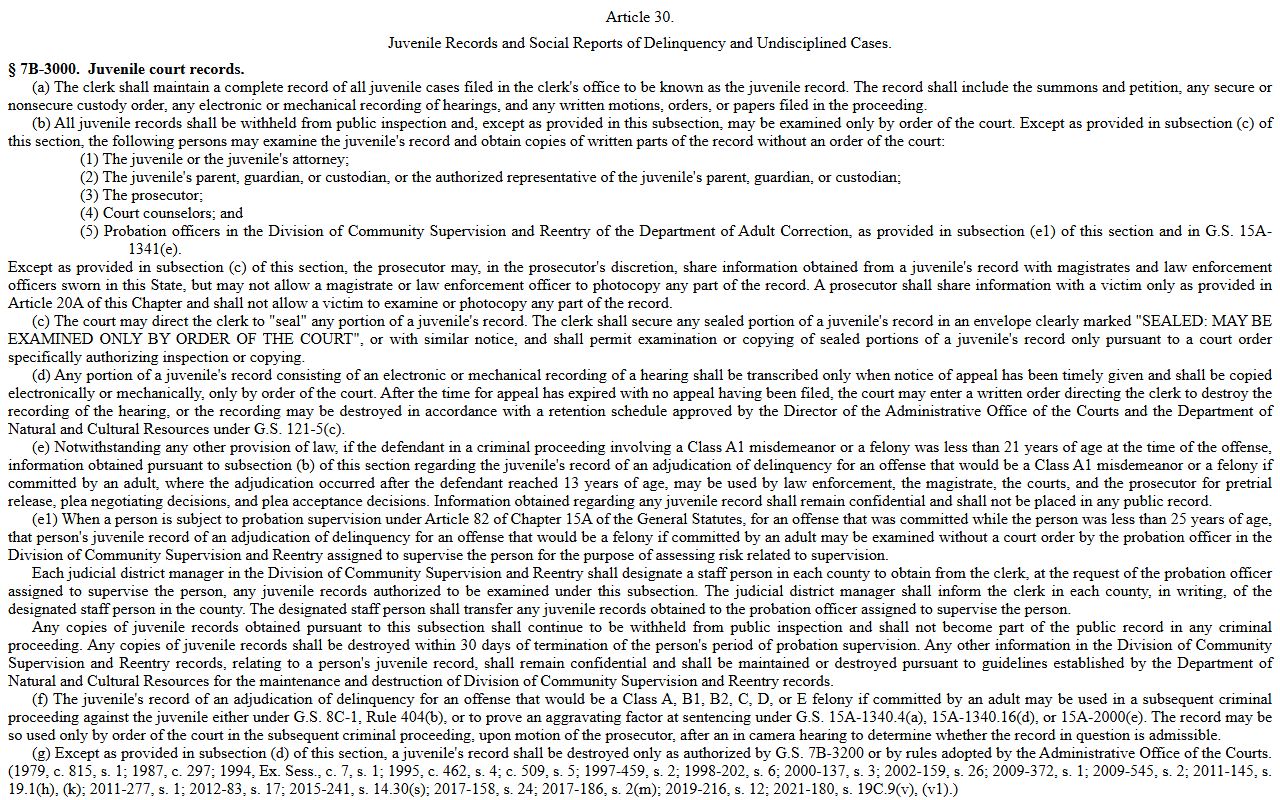
Because juvenile records follow a separate access rule, public searches should not be expected to return full juvenile case detail.
The official source for G.S. 15A-145.5 governs expunction of some nonviolent misdemeanor and felony convictions.
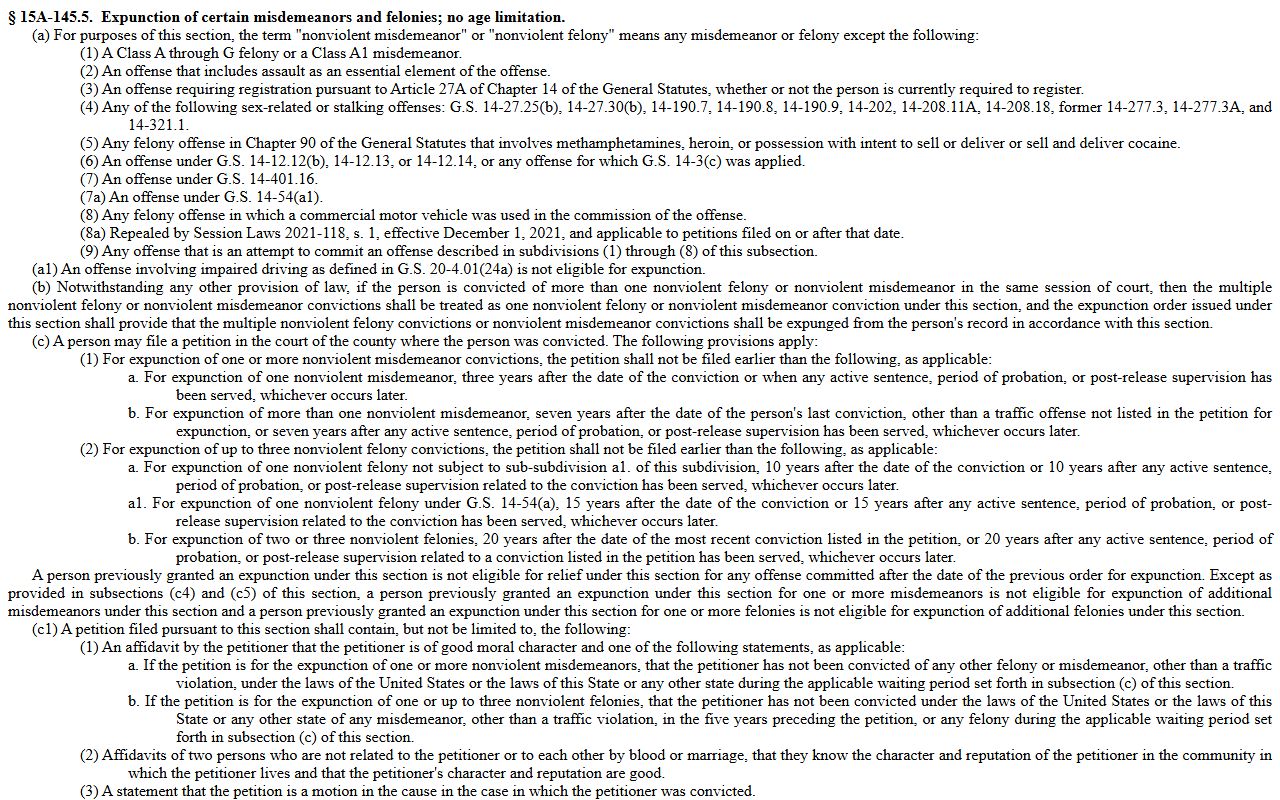
That statute is one reason a Henderson County case can have a public history at one point and later become unavailable through ordinary public lookup.
Henderson County Court Records at the Clerk
Use the Clerk of Superior Court when the online search is incomplete, when a certified copy is needed, when the file is older, or when the record involves exhibits or paper materials that are not visible online. Bring the case number if known, the party names, the record type, and the copy type requested. For mail requests, confirm payment and copy instructions with the clerk before sending money or sensitive information.
Clerk of Superior Court
200 N Grove St, Suite 163
Hendersonville, NC 28792
(828) 694-4100
Monday-Friday, 8:30 AM-5:00 PM
For hearing dates rather than full case files, use the Henderson County court dockets lookup path and then confirm schedule changes with the court if a date is close.