
Henderson County Probate Records
Probate in Henderson County is a Clerk of Superior Court function. The State Court Structure Map identifies the local probate venue as the Estates Division of the Clerk of Superior Court. That means wills, estate administration, letters testamentary, letters of administration, inventories, accountings, and many special proceedings are handled through the clerk's office at the courthouse. Henderson County does not have a separate county probate court like some states use.
The estates function is tied to the same courthouse record system as other North Carolina trial court files. Nonconfidential estate case information may appear in NC eCourts Portal Smart Search because the official portal training materials include Estates and Special Proceedings in case filtering. Full estate files, original-file questions, certified copies, letters, and counter help still go through the Clerk of Superior Court. For estate records that touch land, marriage, or death proof, the Register of Deeds may hold related recorded documents, but the estate case file remains with the clerk.
Estates Division of the Clerk of Superior Court
Henderson County Courthouse
200 N Grove St, Suite 163
Hendersonville, NC 28792
(828) 694-4100
Monday-Friday, 8:30 AM-5:00 PM
Henderson County Probate Terms
Estate records use terms that are short but easy to confuse. These definitions help separate the person who died, the person named to act for the estate, and the court process that gives that person authority.
- Testator
- A person who made a will before death.
- Executor
- The person named in a will to carry out estate duties after court authority is issued.
- Intestate
- Dying without a valid will, which means estate distribution follows North Carolina law.
- Letters testamentary
- Clerk-issued proof that an executor has authority to act for the estate.
- Guardianship
- A court-supervised arrangement for a minor or adult who needs another person to manage care or property issues.
- Conservatorship
- A property-management concept used in some states; in Henderson County research, estate-management matters are handled through North Carolina guardianship and clerk-supervised proceedings.
Search Henderson County Probate Records
Start with NC eCourts Portal Smart Search for public estate case information. Use Henderson County as the location when the filter is available. Search by case number if known, or by decedent, party, executor, administrator, petitioner, or other indexed name. Case type, case status, and file date filters may help when a common name returns too many results. The portal is useful for public case summaries and register-of-actions style information, but not every document will be viewable online.
- Search the NC eCourts Portal using the estate case number or a name tied to the estate.
- Use advanced filters for Henderson County, case type, case status, and filing date when available.
- Write down the case number, estate name, filing date, and any event or document labels shown.
- Call or visit the Clerk of Superior Court for certified copies, letters, paper files, and documents not visible online.
- For a mail request, include the estate name, decedent name, case number if known, document requested, copy type, return contact information, and fee instructions confirmed by the clerk.
| Field Label | Type | Required | Options or notes |
|---|---|---|---|
| Smart Search record/name | Text | Yes, one criterion | Search estate by case number or party/decedent name if indexed. |
| Filter by Location | Dropdown | Optional | Select Henderson County. |
| Case Search Criteria | Panel | Optional | Filter by case type, case status, and file date start/end. |
| Advanced Filtering Options | Expandable | Optional | Use for estates and special proceedings. |
What Henderson County Probate Covers
Estate files vary by the property involved and whether there is a will. A simple estate may have a short application and closing documents. A contested or asset-heavy estate may include more pleadings, notices, inventories, creditor claims, receipts, releases, distributions, orders, and accountings. Small estate or collection by affidavit procedures may be available where North Carolina law allows, but the correct form and route should be confirmed with the clerk before filing.
- Wills filed after death and estate administration matters.
- Applications for letters testamentary or letters of administration.
- Inventories, annual accounts, final accounts, receipts, and releases.
- Creditor claims, notices, distributions, and estate-closing papers.
- Guardianships and minor or adult estate-management matters.
- Special proceedings tied to estate property, partition, or similar clerk-supervised matters.
Note: The online record may show a case summary while the file copy or certified estate letter still requires the clerk.
Henderson County Estate Process
The local process begins with whether the decedent had a will and whether assets require administration. A person seeking to open an estate should contact or visit the Estates Division of the Clerk of Superior Court and use the proper statewide forms. When requirements are met, the clerk issues letters. The personal representative then handles notices, creditor claims, assets, lawful debts, costs, inventories, accountings, and distributions before filing final closing documents.
| Stage | What happens | Record created |
|---|---|---|
| Open estate | Will and application or petition are filed. | Estate case, will, application, oath, initial orders. |
| Authority issued | Clerk issues letters if requirements are met. | Letters testamentary or letters of administration. |
| Administer estate | Representative gathers assets, gives notice, and handles claims. | Inventory, notices, creditor claims, receipts. |
| Account and close | Representative files accounting and closing papers. | Annual or final account, releases, closing order. |
Henderson County Probate Fees
A Henderson-specific court probate fee schedule was not located in the captured official county pages. The safe route is to call the Clerk of Superior Court before filing or mailing a copy request. Do not assume that a Register of Deeds vital-record fee applies to an estate file, and do not assume that a portal result provides certified proof for banks, title companies, or out-of-county proceedings.
| Estate service | Amount | Source note |
|---|---|---|
| Opening an estate | Confirm with clerk | No Henderson-specific probate fee table located in captured official pages. |
| Letters testamentary or administration copies | Confirm with clerk | Ask whether certification and per-page charges apply. |
| Certified estate file copies | Confirm with clerk | Provide case number, estate name, document name, and copy type. |
| Older or archived estate file retrieval | Confirm with clerk | Older paper files may require clerk assistance. |
County Probate vs Federal Court
Probate and estate administration for Henderson County residents is not filed in federal court just because the county sits in a federal judicial district. Henderson County is in the Western District of North Carolina for federal cases, and the federal district has an Asheville Division, but ordinary probate files are handled by the Estates Division of the Clerk of Superior Court. Federal court may matter only when a separate federal civil, bankruptcy, tax, interpleader, or appeal issue exists.
The U.S. District Court for the Western District of North Carolina is a separate federal court system from Henderson County estate administration.
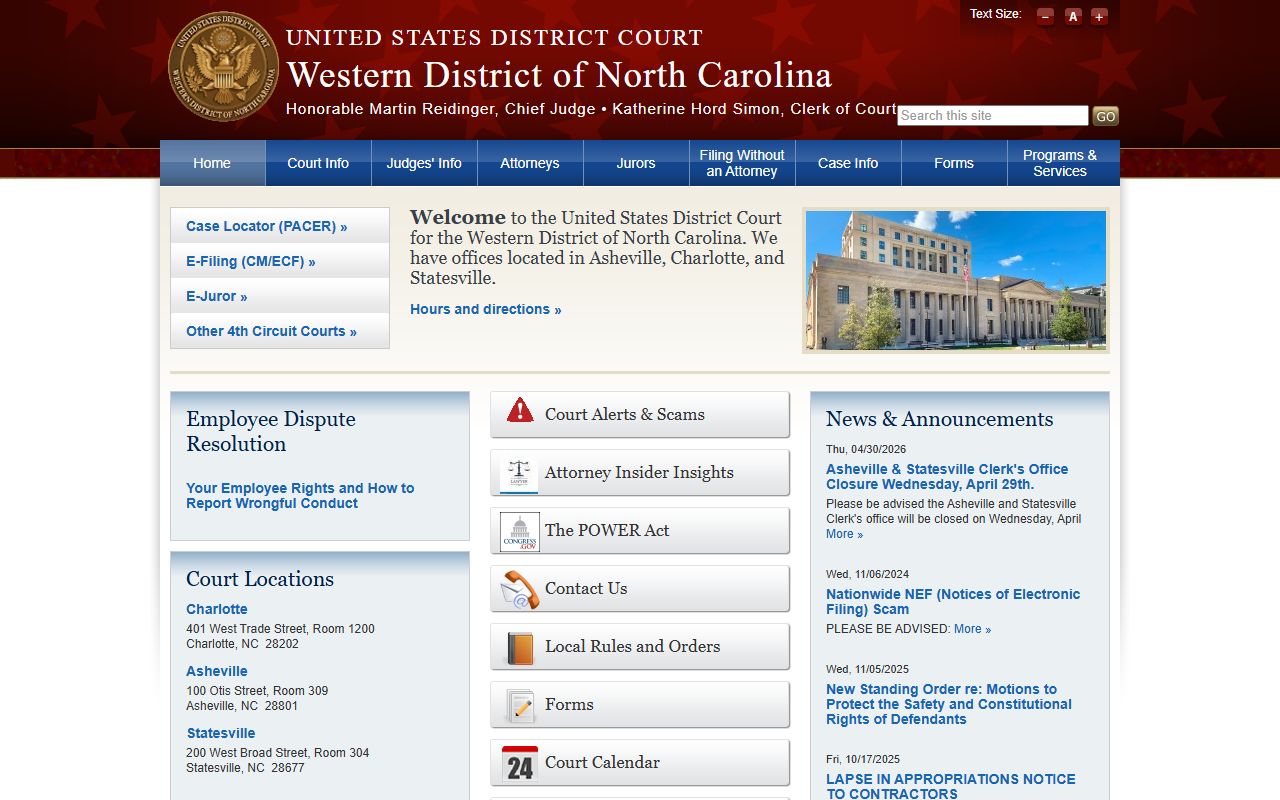
That separation helps prevent a common filing error: county estate records do not move through the federal district court docket.
The Western District jurisdiction page lists Henderson County in the Asheville Division for federal jurisdiction.
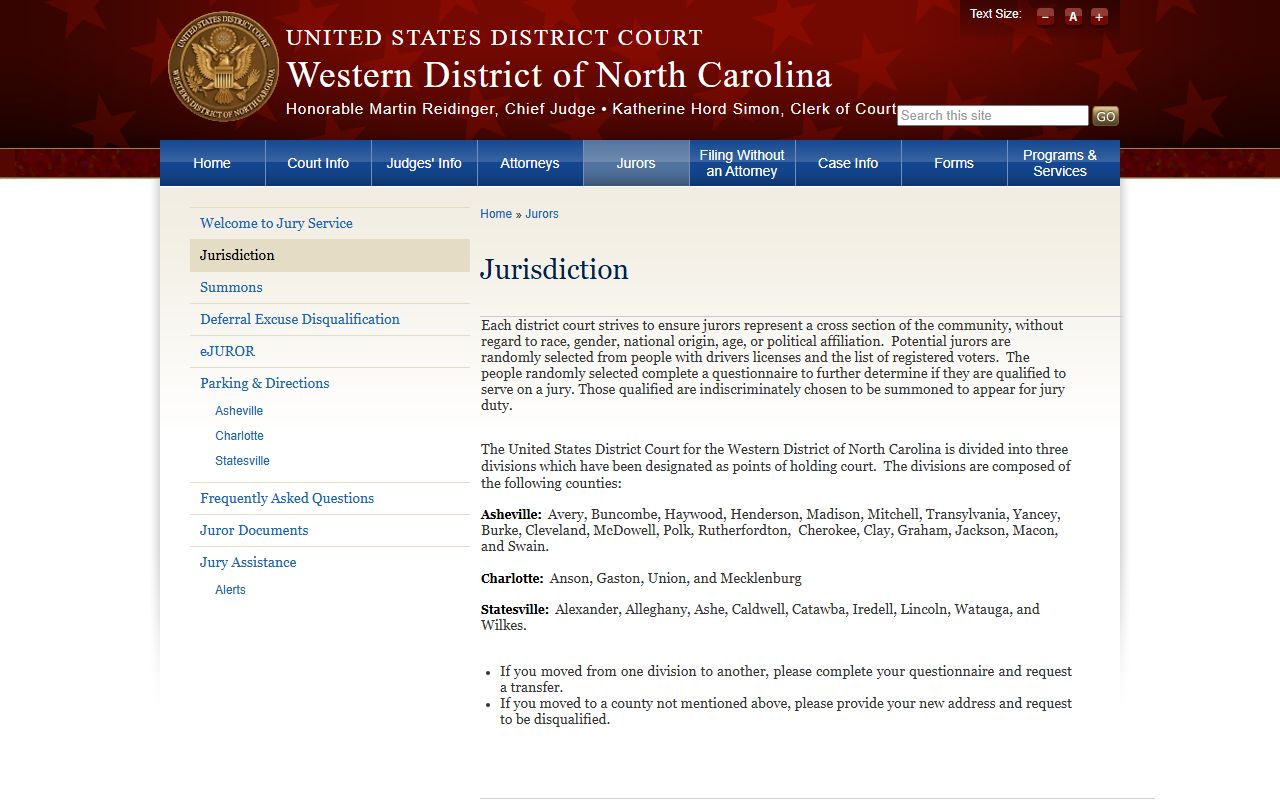
The federal division listing is useful for federal case routing, not for filing a local will or estate administration.
The Western District court locations page identifies federal courthouse locations for federal matters.
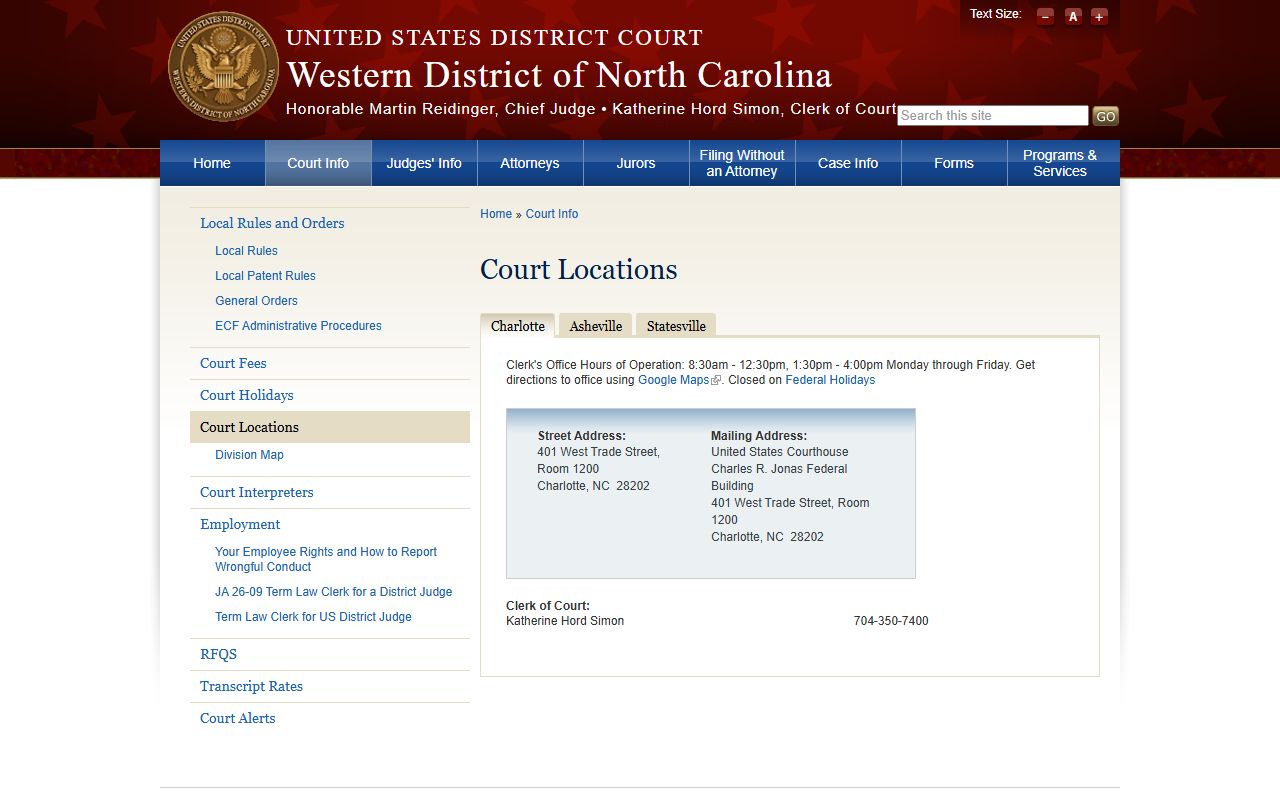
For Henderson County probate records, use the local clerk first unless a federal case number or federal filing issue is involved.
Restricted Henderson County Estate Records
Not every probate or special proceeding record is open in full. Public case information may be available, but mental health details, guardianship details, minor information, sealed filings, and personal identifiers may be restricted or redacted. Estate files can include account numbers, medical references, addresses, minor names, financial data, or other sensitive material. Public access should be treated as record-specific, not as a guarantee that every page in the file is available to every person.
When an online result is incomplete, the best next step is direct clerk contact. The clerk can explain whether a public copy can be made, whether certification is available, whether a file is archived, or whether a court order or party status is required. The clerk cannot give legal advice, so contested estate questions, fiduciary duties, creditor disputes, and guardianship strategy should be handled through legal counsel.